 India
India
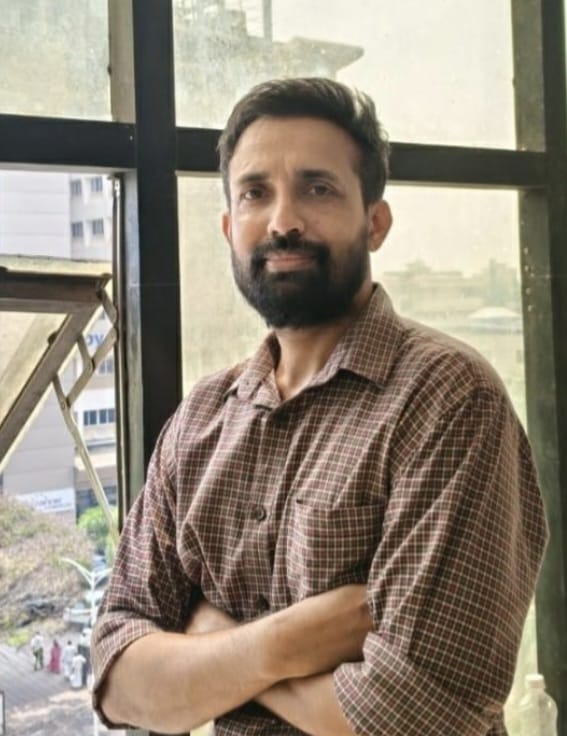
Dr. Sunilkumar Karintha
Livelihood Expert, Kerala Solid Waste Management Project (KSWMP)
🏛️ World Bank–AIIB Funded Initiative, Government of Kerala, India
Quick Overview
"In a gentle way, you can shake the world."
— Mahatma Gandhi"The Village as a Unit of the Economy: Kautilya, Gandhi and Kumarappa — Gandhian Economic Thought for the 21st Century"
Presentation Overview & Abstract
Dr. Sunilkumar Karintha draws from his doctoral research to examine the village economy as envisioned by Kautilya, Mahatma Gandhi, and J.C. Kumarappa — three thinkers whose ideas converge on decentralisation, self-reliance, and ecological harmony. He also presents how these Gandhian economic principles are being operationalised today through women-led urban waste-worker collectives (Harita Karma Sena) under the Kerala Solid Waste Management Project, funded by the World Bank and AIIB.
About Dr. Sunilkumar Karintha
Dr. Sunilkumar Karintha holds a PhD in Gandhian Economic Thought from the School of Economics, University of Hyderabad (2023), with a dissertation on "The Village as a Unit of the Economy: Ideas from Kautilya, M.K. Gandhi and J.C. Kumarappa," supervised by Prof. Naresh Kumar Sharma. He also holds an M.Phil in Economics from the University of Hyderabad and an M.A. in Analytical Economics from the University of Kerala.
He currently serves as Livelihood Expert on the Kerala Solid Waste Management Project (KSWMP), a World Bank–AIIB-funded initiative of the Government of Kerala, where he has developed livelihood and business plans for the Harita Karma Sena — the state's women-led urban waste-worker collectives.
Dr. Karintha's essays have appeared in the Economic and Political Weekly, the Journal of the History of Economic Thought (Cambridge University Press), Outlook, Scroll.in, and The AIDEM, on themes including Amartya Sen and Tagore, and Gandhian approaches to urban solid waste management. He has presented research at Michigan State University and national seminars, and has served as visiting faculty in Political Economy at the Tata Institute of Social Sciences, Tulijapur. His current research interests span economic thought, political violence, and urban solid waste management.